UPSC Maths Optional Self-Study Course
UPSC Maths Optional Self-Study Course
Prepare with the UPSC Maths Optional Self-Study Course through structured syllabus guidance, study materials, previous year questions, topic-wise practice, test series support and final revision strategy from Ramana Sri IAS.
Self-Study Course for UPSC Maths Optional
The UPSC Maths Optional Self-Study Course is designed for aspirants who want to prepare Mathematics Optional independently but still need a clear structure, proper direction, study material, practice plan and test-based evaluation.
Mathematics Optional is a scoring subject when students prepare with concept clarity, regular practice, formula revision, previous year questions and proper answer presentation. Self-study becomes effective only when the preparation is systematic and exam-oriented.
This course helps students study Paper-I and Paper-II in a planned manner, revise important modules, practise PYQs, write tests and improve accuracy before the UPSC Mains examination.
Who Should Choose UPSC Maths Optional Self-Study Course?
Self-Disciplined Students
Students who can study regularly and follow a fixed preparation timetable can benefit from this course.
Working Aspirants
Working professionals who cannot attend daily classes can prepare through structured self-study support.
Repeat Candidates
Repeat aspirants can use the self-study course for revision, PYQ practice and test-based improvement.
Students Outside Delhi
Aspirants who cannot join classroom coaching can still prepare Maths Optional with proper direction.
What You Get in the Self-Study Course
Complete Syllabus Roadmap
Clear Paper-I and Paper-II preparation sequence so that students know what to study first and how to complete the syllabus.
Topic-Wise Study Direction
Guidance for important topics, easy modules, difficult modules and revision priorities.
PYQ-Based Preparation
Previous year questions help students understand UPSC question trends and repeated areas.
Test Series Support
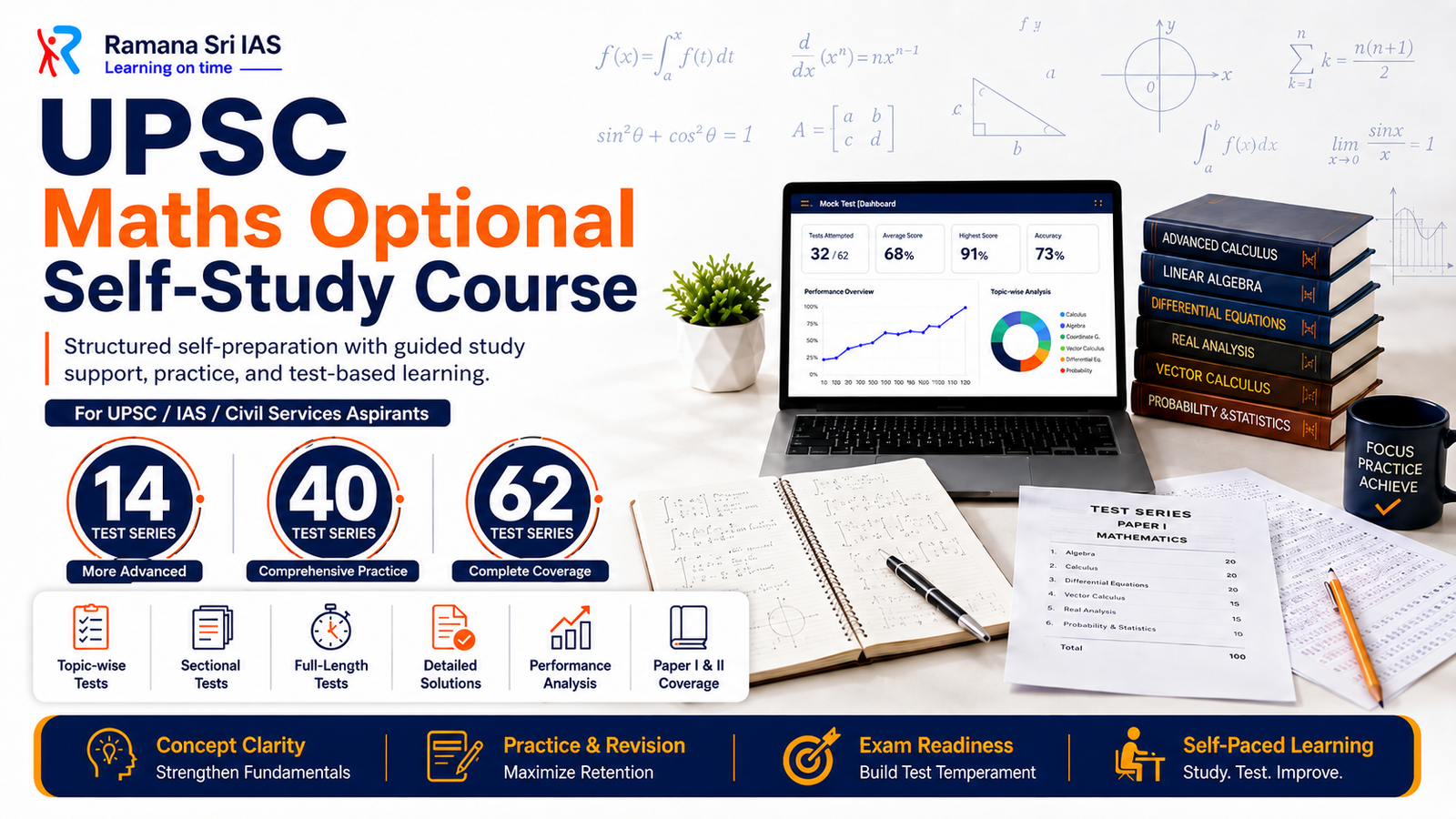
Students can practise through 40 Test Series, 62 Test Series or 14 Test Series according to preparation stage.
Revision Strategy
Formula sheets, theorem revision, short notes and mistake notebooks help improve retention.
Final Exam Practice
Full-length tests and grand practice papers help students build confidence before UPSC Mains.
UPSC Maths Optional Modules Covered
How to Prepare Through UPSC Maths Optional Self-Study Course
1
Start with the complete UPSC Maths Optional syllabus and divide it into Paper-I and Paper-II modules.
2
Study concepts topic-wise and prepare short notes, formula sheets and theorem revision notes.
3
Solve standard examples before moving to UPSC previous year questions.
4
Practise module-wise PYQs to understand repeated patterns and exam-level difficulty.
5
Write topic-wise and full-length tests under time limits to improve speed and accuracy.
6
Revise mistakes, repeat weak topics and use final grand practice before Mains.
Choose the Right Test Series for Your Stage
Advantages of Self-Study Maths Optional Course
Flexible Learning
Students can study according to their own schedule while following a structured course roadmap.
Cost-Effective Preparation
Self-study course is useful for students who want guidance and structure without attending full-time classes.
Better Revision Control
Students can repeat difficult topics, revise formulas and practise weak areas multiple times.
Exam-Oriented Practice
PYQs and tests help students shift from theory study to actual UPSC Mains answer writing.
Rules for Successful Self-Study Preparation
- Do not study randomly; follow a fixed Paper-I and Paper-II plan.
- Revise formulas and theorems regularly.
- Solve PYQs after completing every module.
- Write tests in a fixed time limit like the actual exam.
- Maintain a mistake notebook for repeated calculation and concept errors.
- Use full-length tests before Mains to improve confidence.
Related Resources
Continue Your UPSC Maths Optional Preparation
UPSC Maths Optional Syllabus
Check complete Paper-I and Paper-II syllabus
UPSC Maths Optional Books
Download sample books and study materials
Previous Year Questions
Practise UPSC Maths Optional PYQs
Free Demo Videos
Watch teaching style before joining
Maths Optional Coaching
Explore complete coaching options
Fee Structure
Check course-wise fee details
UPSC Maths Optional Self-Study Course FAQs
What is the UPSC Maths Optional Self-Study Course?
It is a structured preparation plan for students who want to study Maths Optional independently with syllabus direction, study materials, PYQs and test series support.
Is self-study enough for UPSC Maths Optional?
Self-study can work if the student has discipline, proper resources, concept clarity, PYQ practice and regular test writing. Guidance is useful for difficult modules.
Who should choose this self-study course?
Working aspirants, repeat candidates, students outside Delhi and disciplined learners who cannot attend regular classes can choose this course.
Which test series should I choose?
Choose 40 Test Series for topic-wise practice, 62 Test Series for detailed preparation and 14 Test Series for final-stage revision and grand practice.
Does this course cover both Paper-I and Paper-II?
Yes. The self-study course is planned around both UPSC Maths Optional Paper-I and Paper-II modules.
Is the UPSC Maths Optional Self-Study Course useful for working professionals?
Yes. The UPSC Maths Optional Self-Study Course is useful for working professionals because it gives a structured preparation plan, PYQ practice, test series support and revision guidance without daily classroom attendance.
Start Self-Study with Structure
Prepare UPSC Maths Optional with Ramana Sri IAS Self-Study Course
Follow a planned study roadmap through the UPSC Maths Optional Self-Study Course, practise PYQs, write tests and complete Maths Optional preparation with structured self-study support.